Candidates are selected on the basis of their ability to cope with and benefit from the programme. Their suitability can be demonstrated through previous educational achievement or experience and aptitude. Admission by prior qualification will normally require one of the following: Level 3 Counselling
Access Access to Higher Education Diploma – 60 credits, of which at least of which at least 45 must be achieved at level 3 (from 2010, with merit) and with an appropriate combination of modules
Access to Higher Education Diploma & modular achievement with 24 credits at level 3 (from 2010, with merit)
Open College level 3 qualifications (obtained in or before 2008) at 50% or above
NVQ level 3 in relevant vocational areas
At least 160 UCAS tariff points (60 points from AS alone; at least 100 points should be obtained from A2s, AVCE, GNVQ Advanced or Scottish Highers)
Relevant work experience/ professional qualifications
All students will be required to have a current Disclosure and Barring Service (DBS) certificate
All students equire 2 hours per week paid or voluntary work in a relevant counselling setting (100 hours over the 2 years, this is integral to the course)
Mature entry Prospective mature students without prior academic qualifications in relevant subjects may be asked to demonstrate their suitability for the programme by researching and producing a 1200 word essay on an appropriate topic including the importance of personal awareness and the three main approaches to counselling which the applicant would need to complete and bring to a second interview.
All students will be interviewed for their suitability for the programme.
Start date:
Sep 2026
Course Overview
The FdA Counselling Studies prepares you to engage deeply with the theoretical frameworks and key concepts shaping modern counselling practice. You’ll explore critical approaches—from humanistic and psychodynamic to cognitive-behavioural models—and learn how to employ them in supporting clients toward greater self-awareness, resilience, and coping strategies.
This programme combines theoretical insight with applied experience: you’ll complete 100 hours of supervised clinical practice, allowing you to translate learning into tangible therapeutic relationships. Alongside this, the course strengthens your transferable skills in critical enquiry, analysis, and independent learning, laying a solid foundation for professional development in counselling.
Whether you’re looking to launch a helping career or deepen existing practice, this qualification gives you both the academic rigour and practical grounding to make meaningful, informed interventions.
Course Overview
YEAR 1 • Personal and Academic Development • Counselling Skills • Counselling Theories • Introduction to Research • Developing Counselling Skills in Clinical Practice • Developmental Psychology
YEAR 2 • Continuing Personal Development and Professional Practice • Cognitive Behavioural Therapy • Models of Practice • Research Methods in Counselling • Psychosocial Approaches to Abnormal Mental Health Conditions • Mental Health and Wellbeing
Additional Information
Outstanding Support – Benefit from one-to-one academic guidance, wellbeing services, and tailored careers advice throughout your studies.
Strong University Partnership – This degree is validated by Liverpool John Moores University.
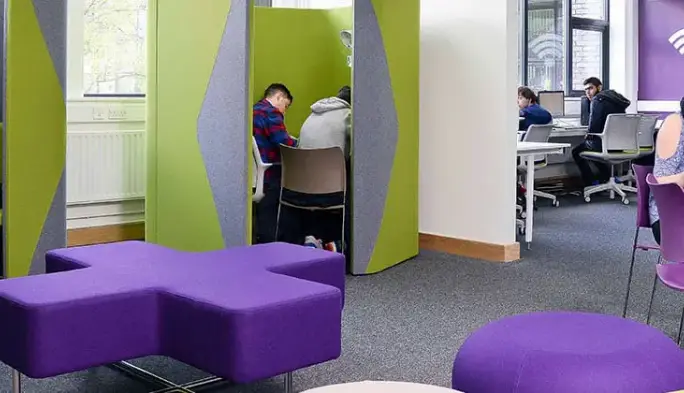
Specialist Facilities – Access purpose-built learning environments including counselling pods, a VR suite, and a dedicated University Centre.
Proven Success – Students achieve some of the highest satisfaction and progression rates in the region, moving into employment or postgraduate study.
Financial and Practical Help – From bursaries and equipment loans to free breakfast and gym access, we provide wide-ranging support to help you succeed.
How is the course delivered?
Learning is highly interactive and designed to balance theory with practice. You will engage in lectures, seminars, workshops, and skills practice sessions, building a strong academic foundation while developing the interpersonal skills required of a counsellor.
A significant feature of delivery is practical counselling skills training, which takes place in supervised workshops and through role-play activities that reflect real client scenarios. You will also complete 100 hours of supervised clinical practice, giving you invaluable hands-on experience in a professional counselling setting.
Blended learning approaches, including online resources and guided independent study, support your academic development. Small group tutorials and regular supervision provide personalised feedback, ensuring you develop confidence, self-awareness, and a reflective approach to your practice.
How my learning will be assessed?
Essays and written assignments, reports, and seminar papers — demonstrating critical engagement with counselling theories and their applied relevance.
Presentations, both individual and group, including seminar presentations and poster-style delivery, helping develop communication and reflective skills.
Portfolios and case studies, incorporating reflective commentaries and supervisor or peer feedback alongside evidence from clinical practice.
Observed or recorded practice sessions, offering a direct demonstration of counselling skills under supervision or peer review.
Course Facilities
As an FdA Counselling Studies student, you will study within our dedicated University Centre, featuring modern teaching rooms, IT suites, and collaborative learning spaces. The Learning Resource Centre provides access to journals, academic texts, and online databases to support your research and assignments.
You will also benefit from specialist counselling training rooms, designed to simulate professional practice through skills workshops and role-play scenarios. Alongside these, small-group tutorials, quiet study areas, and tailored academic and wellbeing support services ensure you have the resources and guidance to succeed throughout your studies.
Potential Careers
Graduates of the FdA Counselling Studies are well-prepared to take on professional roles in the helping professions. Typical pathways include work as an Assistant Counsellor, Support Worker, Mental Health Support Practitioner, or Family Support Worker in education, health, and community settings.
Many students choose to continue their studies with the BA (Hons) Counselling and Psychotherapies (Top-Up), which supports progression towards accreditation with professional bodies. Longer term, this qualification provides a foundation for postgraduate training and specialist pathways in counselling, psychotherapy, or related areas such as social work, youth work, or mental health services.